JGVW Special Issue: Experiencing Games

I just got a copy of the special issue Experiencing games: Games, play and players of the Journal of Gaming and Virtual Worlds edited by Waern, Thorhauge, Verhagen, and me (the online version should come out by the end of December).

Special issue TOC:

  • Lankoski, Waern, Thorhauge, Verhagen: Introduction to special issue: Experiencing Games: Games, play and players, pp. 175-180. DOI=10.1386/jgvw.3.3.175_7.
  • Kivikangas et al.: A review of the us of psychophysiological methods in game research, pp. 181-199. DOI=10.1386/jgvw.3.3.181_1.
  • Norgard: The corporeal-locomotive craftsman: Gaming in World of Warcraft, pp. 201-218. DOI=10.1386/jgvw.3.3.201_1.
  • Montola: The painful art of extreme role-playing, pp. 219-237. DOI=10.1386/jgvw.3.3.175_7. DOI=10.1386/jgvw.3.3.219_1.
  • Waern: ‘I’m in love with someone that doesn’t exist!’ Bleed in the context of a computer game, pp- 239-257. DOI=10.1386/jgvw.3.3.239_1.
  • Hagen: Designing for player experience: How professional game developers communicate design visions, pp. 259-275. DOI=10.1386/jgvw.3.3.259_1.

(I add direct links to dois when the online versions are available.)
Intro to Gameplay Programming with Unity

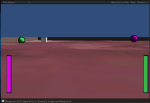
This post contains an solutions  to my Unity programming exercises and classes I showed at the lectures. This post cover coding following game logic:

  • a waypoint track
  • an agent following a waypoint track
  • display two meters  for energy and health
  • collectable powerups for gaining health and power

Continue reading “Intro to Gameplay Programming with Unity”

Intro to Unity GUI

This post contains an solutions  to my Unity programming exercises and classes I showed at the lectures. This post cover coding some basic things about using Unity GUI system.

StartScreenGUI (C#)

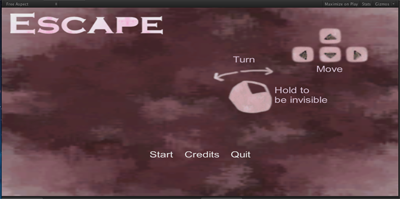
This class creates simple re-sizable and skinnable start screen for a game with main screen, credits screen, and confirm screen for quitting. The main screen is show in the Figure (with the textures and skin setup).

Continue reading “Intro to Unity GUI”

Digirakkaus 2 (Digital Love 2)

Digirakkaus 2 will be published Oct 28, 2011 (edited by Saarikoski, Heinonen, Turtiainen). We (Reunanen M., Lankoski, P., &  Heinonen, M.) have a chapter there about the history of digital erotica and how it was used in Finland. We look at years 1980 to 1995. The chapter is titled Joystickit kuumina – varhaista erotiikkaa kotitietokoneilla (Joysticks in heat: early erotica for personal computers).

More info  in Finnish and a hot trailer is available on http://digirakkaus.wordpress.com/2011/10/04/kirja-ilmestyy-28-10-2011/.


Notes on Aalto Game Design Courses

Now the first year (of two year MA degree programme) of the Game Design and Production at the School of Art and Design at the Aalto University is over (and I am at the Södertörn University), I thought to write notes about the courses.
Game Design:

  • Gameplay Design Workshop (5 days) by Petri Ikonen (Digital Chocolate) & me. (my slides: 1, 2)
  • Lecture 1: Game Design by me
  • Lecture 2: Narrative Design 1/2 by Mikko Rautalahti (Remedy)
  • Lecture 3: Narrative Design 2/2 by Mikko Rautalahti (Remedy)
  • Lecture 4: Level Design for Casual Games by Petri Ikonen (Digital Chocolate)
  • Lecture 5: Gameplay Design Patterns by Jussi Holopainen (NRC)
  • Lecture 6: Level Design by Jarkko Kainulainen (Tribe Studios)

Game Analysis

  • Four mornings with lectures and analytical exercises by me (my slides)
  • Analysis on game reported as an essay

Game Project

  • Two groups of students designed and developed fully playable murder mystery games with great visuals and potential to be polished great games. Tutored and taught by me.

Understanding Games

  • Lectures on Roleplaying Games by Jaakko Stenros (University of Tampere) & Markus Montola (Gray Area)
  • Exam on Tavinor, The art of videogames
  • (alternative for this was a book exam)

Playability Evaluation

  • Workshop (1 day) by Elina Ollila (NRC)
  • Workshop (4 days) by Juha Huhtakallio (Kuuasema)

Academic Publishing Practices

I have been thinking to write a post about academic publishing and copyrights. Guardian, however, was faster and provided very good piece of how tax money is exploited by the academic publishers for making huge profits.

It would (probably) be cheaper for Universities to start open source journals for publishing research and stop paying the journal fees, but as long as performance metrics skew towards old traditionally published journals (because of their impact factor) that is not likely to happen.

CFP: 6th International Conference on the Philosophy of Computer Games: The Nature of Player Experience

via DiGRA

We hereby invite scholars in any field of studies who take a professional interest in the philosophy of computer games to submit papers to the 6th International Conference on the Philosophy of Computer Games, to be held in Madrid, Spain, on January 29th-31st 2012. Accepted papers will have a clear focus on philosophy and philosophical issues in relation to computer games. They will refer to specific examples from computer games rather than merely invoke them in general terms.

Continue reading “CFP: 6th International Conference on the Philosophy of Computer Games: The Nature of Player Experience”

Quick Intro to Spreadsheets for Game Designers

Claire Blackshaw gives brief intro to using spreadsheets in Opinion: Stop Being The Useless Designer – Excel and Formulas.

Excel (and other spreadsheet programs such as Numbers and Open Office) has excellent tools to quick prototype game system behaviors, as Blackshaw points outs.

For prototyping complex behaviors, writing simple computer programs in unavoidable, I think. I have found Python extremely useful for quick prototyping. There are handy libraries for Python to create and analyze simulations; for example, SimPy for creating sumulations and rpy for statistical calculations (rpy requires R). Pygame can be used for creating playabe prototypes.